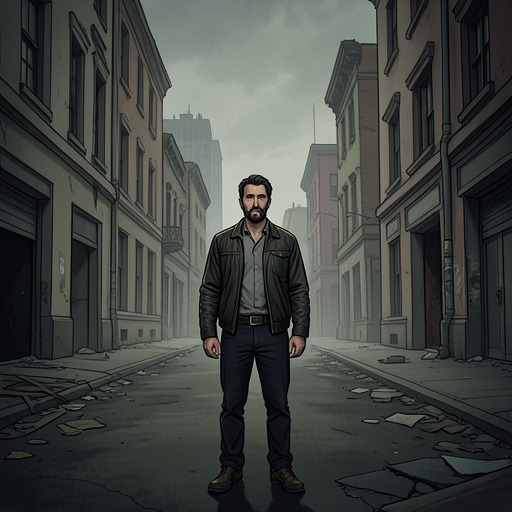
Tessa Berens
The SilenceTessa Berens is a poet and habitual keeper of small notebooks, introduced as Jim Kripps’s wife and later shown trying to orient herself after an emergency landing. Her literary practice gives ordinary observations a private record, while the loss of her notebook during the journey sharpens the contrast between what she can identify and what she cannot remember.
Identity and Work
Tessa is dark-skinned and of Caribbean, European, and Asian origins. Her poems appear regularly in literary journals, and she also works online as an editor for an advisory group that responds to subscribers’ questions. The subjects range from hearing loss and bodily equilibrium to dementia, placing her work in contact with both literary expression and practical concerns about the body and memory.
Disorientation After the Landing
In the aftermath of the landing, Tessa can identify herself and has her passport, money, and coat, but she has neither her baggage nor her notebook. She has no sense of having gone through customs and cannot recall feeling afraid. Her attention to Jim’s presence is steadier: he is there with her, and she knows him as a claims adjuster for an insurance company. The fact of his familiar company reassures her even as she wonders why it should.
Jim has a cut on his forehead. Tessa keeps looking at it and nearly reaches to touch him, as though contact might help them remember. Their phones are dead, and the usual devices for communication and orientation are unavailable. Her impulse toward touch, embrace, and continued conversation contrasts with the missing notebook: one form of keeping hold of experience has been lost, so she turns toward the person beside her.
Notebooks and Memory
For years, Tessa has written in a succession of notebooks, accumulating so many that they are stacked in cabinets, desk drawers, and other places at home. She sometimes revisits old ones and finds it striking to encounter what she once thought worth recording; their words carry her back into what she calls dead time. Her notebooks are not presented as works intended for an audience. They are a personal journal, useful to her whether they hold a line of poetry she later crosses out or the design and name on a supermarket package.
The small blue notebooks measure roughly three by four inches, small enough to slip into a jacket pocket. Tessa has dozens still unused at home and typically takes two or three when she travels, looking, listening, and scribbling. Their practical portability makes them a means of collecting passing details, but in this journey their absence also marks a break in her usual way of attending to and preserving experience.
What She Wants
Despite her questions about whether ordinary experience has been suspended and whether practical needs should take priority, Tessa’s immediate wish is to go home with Jim. She is willing to walk if necessary, preferably in daylight, but cannot know what the circumstances mean or what lies ahead. Her reflections move between large uncertainties and basic bodily needs—food, shelter, friends, and the ability to use a toilet—without resolving the crisis. The surviving evidence leaves her at that point of uncertainty: she knows her name, recognizes her husband, and wants to return home, but the missing notebook and gaps in memory remain unaccounted for.